Showing posts with label Brushstrokes. Show all posts

01 Painting by the Orientalist Artists of the Nineteenth-Century, with footnotes, 36

Studio of Ferdinand Bol
An Elegant Lady at a Window
Oil on canvas
103.5 x 80 cm
Private collection

Ferdinand Bol (24 June 1616 – 24 August 1680) was a Dutch painter, etcher and draftsman. Although his surviving work is rare, it displays Rembrandt's influence; like his master, Bol favored historical subjects, portraits, numerous self-portraits, and single figures in exotic finery.

Ferdinand Bol was first an apprentice of Jacob Cuyp in his hometown and/or of Abraham Bloemaert in Utrecht. After 1630 he studied with Rembrandt, living in his house in Sint Antoniesbreestraat. In 1641 Bol started his own studio.

In 1652 he became a burgher of Amsterdam, and in 1653 he married Elisabeth Dell, whose father held positions with the Admiralty of Amsterdam and the wine merchants' guild, both institutions that later gave commissions to the artist. Within a few years (1655) he became the head of the guild and received orders to deliver two chimney pieces for rooms in the new town hall designed by Jacob van Campen, and four more for the Admiralty of Amsterdam.

Around this time, Bol was a popular and successful painter. His palette had lightened, his figures possessed greater elegance, and by the middle of the decade he was receiving more official commissions than any other artist in Amsterdam.

Probably his best known painting is a portrait of Elisabeth Bas, the wife of the naval officer Joachim Swartenhondt and an innkeeper near the Dam square. This and many other of his paintings would in the 19th century be falsely attributed to Rembrandt. More on Ferdinand Bol


Please visit my other blogs: Art Collector, Mythology, Marine Art, Portrait of a Lady, The Orientalist, Art of the Nude and The Canals of Venice, Middle East Artists, 365 Saints and 365 Days, also visit my Boards on Pinterest

Images are copyright of their respective owners, assignees or others. Some Images may be subject to copyright

I don't own any of these images - credit is always given when due unless it is unknown to me. if I post your images without your permission, please tell me.

I do not sell art, art prints, framed posters or reproductions. Ads are shown only to compensate the hosting expenses.

If you enjoyed this post, please share with friends and family.

Thank you for visiting my blog and also for liking its posts and pages.

Please note that the content of this post primarily consists of articles available from Wikipedia or other free sources online.

01 Paintings, The amorous game, Part 37 - With Footnotes

Achille Mollica (Italian 19th Century)
Playing hard to get
Oil on canvas 
52.1 x 73.7cm (20 1/2 x 29in).
Private collection

Achille Mollica (1832-1885) was an Italian painter of both canvases and ceramics. Achille was born to a family who manufactured maiolica ceramics. His father, Giovanni, had established the factory of "Mollica Ceramiche", which employed Achille's brothers, Ciro and Alessandro. Achille was however the greatest talent, studying ceramics at the Institute of Fine Arts of Naples.

He was a resident of Naples. In 1887 at Naples, he exhibited: a terra-cotta Amphora; in 1880 at Turin he exhibited some paintings: Ritorno and Ricordi del ballo; in 1881 at Milan, he exhibited I primi bocconi; Zobeide, bello studio di testa; Clorinda, painted on maiolica; at Rome in 1883: Diversi amori; Prima di un convito : Scala a Posillipo, a Turin, in 1884: Amore e Veduta a Posillipo. He also completed many portraits. He also exhibited in 1874 at Naples: Un tunisino; in 1875, La pesca and in 1876, Lo scacciapensieri. He also participated in the 1988 Esposizione Italiana at London. More on Achille Mollica


Please visit my other blogs: Art Collector, Mythology, Marine Art, and The Canals of Venice

Images are copyright of their respective owners, assignees or others. Some Images may be subject to copyright

I don't own any of these images - credit is always given when due unless it is unknown to me. if I post your images without your permission, please tell me.

I do not sell art, art prints, framed posters or reproductions. Ads are shown only to compensate the hosting expenses.

If you enjoyed this post, please share with friends and family.

Thank you for visiting my blog and also for liking its posts and pages.

18 Paintings, PORTRAIT OF A LADY FROM SAVOY , from the 18th & 19th C., with Footnotes. #3

French School (15th century)
Francoise-Madeleine d'Orleans (1648-64) Duchess of Savoy, c. 1664
 prior to her marriage
Oil on canvas
60 x 73 cm (23,6 x 28,7 inches)
Chateau de Versailles

Françoise Madeleine d'Orléans (13 October 1648 – 14 January 1664) was born a Princess of France and was the Duchess of Savoy as the first wife of Charles Emmanuel II. She was a first cousin of Louis XIV as well of her husband. She was the shortest-serving Savoyard consort, dying at the age of fifteen, childless.

Orléans was born in Paris in 1648. She was the youngest surviving daughter of Gaston d'Orléans and his second wife Marguerite of Lorraine. From birth, she was styled Mademoiselle de Valois, derived from one of her father's subsidiary titles. She grew up in the company of her sisters and Mademoiselle de La Vallière, future mistress of Louis XIV. She resided at the Château de Blois. Her father died in 1660 and her mother remained unmarried.

As French court etiquette dictated, she held the status of a Granddaughter of France.

Orléans married the Duke of Savoy by proxy at the Palais du Louvre on 4 March 1663. The couple met for the first time at Annecy on 3 April 1663 where they were married officially. The couple travelled to Turin, capital of Savoy, where they arrived on 15 June 1663. She was known as Francesca Maddalena d'Orléans in her adopted Savoy.

The duchess soon died on 14 Jan 1664 at the Royal Palace of Turin, leaving her husband without an heir. She was 15 years old. More on Françoise Madeleine d'Orléans

The French Renaissance was the cultural and artistic movement in France between the 15th and early 17th centuries. The period is associated with the pan-European Renaissance, a word first used by the French historian Jules Michelet to define the artistic and cultural "rebirth" of Europe.

Notable developments during the French Renaissance include the spread of humanism, early exploration of the "New World" (as New France by Giovanni da Verrazzano and Jacques Cartier); the development of new techniques and artistic forms in the fields of printing, architecture, painting, sculpture, music, the sciences and literature; and the elaboration of new codes of sociability, etiquette and discourse.

The French Renaissance traditionally extends from (roughly) the French invasion of Italy in 1494 during the reign of Charles VIII until the death of Henry IV in 1610. This chronology notwithstanding, certain artistic, technological or literary developments associated with the Renaissance arrived in France earlier; however, the Black Death of the 14th century and the Hundred Years' War kept France economically and politically weak until the late 15th century.

The reigns of Francis I of France (from 1515 to 1547) and his son Henry II (from 1547 to 1559) are generally considered the apex of the French Renaissance. More on French School (15th century)


French School circa 1680, follower of Beaubrun
FRANCES-MADELEINE ORLEANS, DUCHESS OF SAVOY, CIRCA 1680
Oil on canvas 
upper right Inscriptions FRANÇOISE MADELEINE ORLEANS Duchess of Savoye / 1664 / 197BIS
the collection of brand back of King Louis-Philippe and No. 175 
107.5 x 91 cm; 42 1/4 by 35 5/8 in

Orléans was born at the Château de Saint Germain en Laye outside Paris in 1648.


Le Saint-Germain-en-Laye et la rampe des grottes

She was the youngest surviving daughter of Gaston d'Orléans and his second wife Marguerite of Lorraine. 


Anthony van Dyck (1599–1641)
Portrait of Gaston of France, duke of Orleans (1608-1660), c. 1632 or 1634
Father
Oil on canvas
193 × 119 cm (76 × 46.9 in)
Musée Condé

Sir Anthony van Dyck, ( 22 March 1599 – 9 December 1641) was a Flemish Baroque artist who became the leading court painter in England, after enjoying great success in Italy and Flanders. He is most famous for his portraits of Charles I of England and his family and court, painted with a relaxed elegance that was to be the dominant influence on English portrait-painting for the next 150 years. He also painted biblical and mythological subjects, displayed outstanding facility as a draughtsman, and was an important innovator in watercolour and etching. The Van Dyke beard is named after him. More Sir Anthony van Dyck


Anthony van Dyck (1599–1641)
Portrait of Margaret of Lorraine
Mother
Oil on canvas
203 × 115 cm (79.9 × 45.3 in)
Uffizi Gallery

From birth, she was styled Mademoiselle de Valois, derived from one of her father's subsidiary titles. She was the favourite sister of La Grande Mademoiselle, the famous heiress. She grew up in the company of her sisters and Mademoiselle de La Vallière, future mistress of Louis XIV. She resided at the Château de Blois. Her father died in 1660 and her mother remained unmarried.


School of Pierre Mignard (1612–1695)
Portrait of Anne Marie Louise d'Orléans, Duchess of Montpensier, also referred to as La Grande Mademoiselle
Oil on panel
140 × 110 cm (55.1 × 43.3 in)
Palace of Versailles

As French court etiquette dictated, she held the status of a Granddaughter of France as a male line descendant of the late king Henry IV of France. She was styled as a petite-fille de France.

Pierre Mignard (17 November 1612 – 30 May 1695), was a French painter known for his religious and mythological scenes and portraits. He was a near-contemporary of the Premier Peintre du Roi Charles Le Brun with whom he engaged in a bitter, life-long rivalry.

Pierre Mignard was born at Troyes in 1612. He came from a family of artisans. He was the younger brother of Nicolas, who became a painter and etcher. Mignard trained in Bourges with the Mannerist painter Jean Boucher. He then studied for a period in the studio of Simon Vouet. Mignard left for Rome in 1635 where he would stay about 22 years. 

In Rome he painted religious commissions. He was particularly known for his many images of the Madonna and Child. They were so popular that they were referred to as "Mignardises." He also painted altarpieces. His compatriot Nicolas Poussin hired Mignard to make copies of is works. He was also active as a reproductive engraver making copies after Annibale Carracci. Mignard's life-long interest in portrait painting was also developed at this time and he painted portraits of subsequent popes, cardinals and prominent members of the Italian nobility. He also travelled to Northern Italy where he visited Bologna, Parma, Mantua, Florence and Venice.

His reputation was such that he was summoned to Paris in 1657. In Paris he became a popular portrait painter. He found favor with king Louis XIV who sat for many portraits. Mignard became a rival of the leading French painter of that time and first painter to the King, Charles Le Brun. He declined to enter the Academy of which Le Brun was the head. Mignard also opposed the authority of the Academy. 


With the death of Le Brun in 1690, Mignard succeeded to all the posts held by his opponent. He died in 1695 at Paris as he was about to begin work on the cupola of the Invalides. More on Pierre Mignard


Anonymous (Italy)
Portrait of Christine Marie, Dowager Duchess of Savoy, c. 1633
Oil on canvasil
Staatsgalerie im Neuen Schloss, Schleißheim

Under the influence of her paternal aunt Christine Marie, Dowager Duchess of Savoy, she was engaged to her first cousin Charles Emmanuel II, Duke of Savoy. Christine Marie had chosen her as she had wanted to maintain her power and influence in government having previously been regent for her son since 1637. 


Pierre Mignard (1612–1695)
Portrait of cardinal Jules Mazarin (1602-1661)
Oil on canvas
65 × 55.5 cm (25.6 × 21.9 in)
Musée Condé, Château de Chantilly, Chantilly

The match was approved of by Cardinal Mazarin who had previously rejected Marie Jeanne of Savoy, another candidate for Charles Emmanuel II. Orléans proved suitably docile and was chosen over Marie Jeanne.


Unknown
Marie Jeanne of Savoy (1644-1724) some time after her marriage holding the Savoyard crown
Oil on canvas
Location Unknown

Orléans married the Duke of Savoy by proxy at the Palais du Louvre on 4 March 1663. The couple met for the first time at Annecy on 3 April 1663 where they were married officially. The couple travelled to Turin, capital of Savoy, where they arrived on 15 June 1663. She was known as Francesca Maddalena d'Orléans in her adopted Savoy.


Piedmontese School, 17th Century
Charles Emanuel II, the Duke of Savoy, in armour
Oil on canvas
 41.34 X 32.28 in (105 X 82 cm)
Private Collection

The duchess soon died on 14 Jan 1664 at the Royal Palace of Turin, leaving her husband without an heir.She was buried at Turin Cathedral where she rests today. Her husband, inconsolable at her death, ordered a lavish funeral. After Orléans' death, Louis XIV tried to engage La Grande Mademoiselle to Charles Emmanuel II who refused the match. He later married again to Marie Jeanne of Savoy by whom he had a son.


Unknown artist
Charles Dauphin - Carlo Emanuele II (1634-1675), son and heir of Vittorio Amedeo I, his wife Jeanne de Nemours (1644-1724) and his son, the future Vittorio Amedeo II (1666-1732), c. 1666
Oil on Canvas
Museo del Prado, Madrid

BRAMBILLA GIOVANNI BATTISTA
Duke Carlo Emanuele II of Savoy; Vittorio Amedeo II Prince of Piedmont, C.1675
340 CM x 282 CM
OIL ON CANVAS
PALAZZO MADAMA, Turin, Italy

Giovanni Battista Brambilla (active 1770) was an Italian painter. He was a native of Piedmont. He was a pupil of Carlo Delfino. He painted for churches in Turin, including a Martyrdom of St. Dalmazio for the church dedicated to that saint. He also painted altarpieces for churches in Villafranca. The Equestrian Portrait of Carlo Emanuele II, Duke of Savoy and of Vittorio Amedeo II, Prince of Piedmont (c. 1675) are on exhibit at the Palazzo Madama of Turin. More on Giovanni Battista Brambilla


Acknowledgment: Sotheby's, 

Images are copyright of their respective owners, assignees or others

Tate blockbuster to prove Pierre Bonnard was a great Modern painter | The Art Newspaper

Pierre Bonnard
Dining Room in the Country (1913)
Oil on canvas
64 3/4 x 81 in. (164.47 x 205.74 cm)
Minneapolis Institute of Art

In 1912, Pierre Bonnard bought a country house called Ma Roulotte ("My Caravan") at Vernonnet, a small town on the Seine. This painting shows the dining room there, with cats perching on the chairs and Marthe de Méligny, the artist's wife, leaning on the windowsill. Bonnard, who considered himself "the last of the Impressionists," emphasized the expressive qualities of bright colors and loose brushstrokes in this picture. He united the interior with the exterior through the open window and door, and linked the forms by bathing them in related hues. Unlike the Impressionists, however, Bonnard painted entirely from memory. And like the Symbolists, he wanted his works to reflect his subjective response to the subject. More on this painting

Pierre Bonnard (French: [bɔnaʁ]; 3 October 1867 – 23 January 1947) was a French painter, illustrator and printmaker, known especially for the stylized decorative qualities of his paintings and his bold use of color. A founding member of the Post-Impressionist group of avant-garde painters Les Nabis, his early work was strongly influenced by the work of Paul Gauguin, as well as the prints of Hokusai and other Japanese artists. Bonnard was a leading figure in the transition from Impressionism to Modernism. He painted landscapes, urban scenes, portraits and intimate domestic scenes, where the backgrounds, colors and painting style usually took precedence over the subject More on Pierre Bonnard


Please visit my other blogs: Art Collector, Mythology, Marine Art, Portrait of a Lady, The Orientalist, Art of the Nude and The Canals of Venice, Middle East Artists, 365 Saints, 365 Days, and Biblical Icons, also visit my Boards on Pinterest and deviantart

Images are copyright of their respective owners, assignees or others. Some Images may be subject to copyright

I don't own any of these images - credit is always given when due unless it is unknown to me. if I post your images without your permission, please tell me.

I do not sell art, art prints, framed posters or reproductions. Ads are shown only to compensate the hosting expenses.

If you enjoyed this post, please share with friends and family.

Thank you for visiting my blog and also for liking its posts and pages.

Please note that the content of this post primarily consists of articles available from Wikipedia or other free sources online.

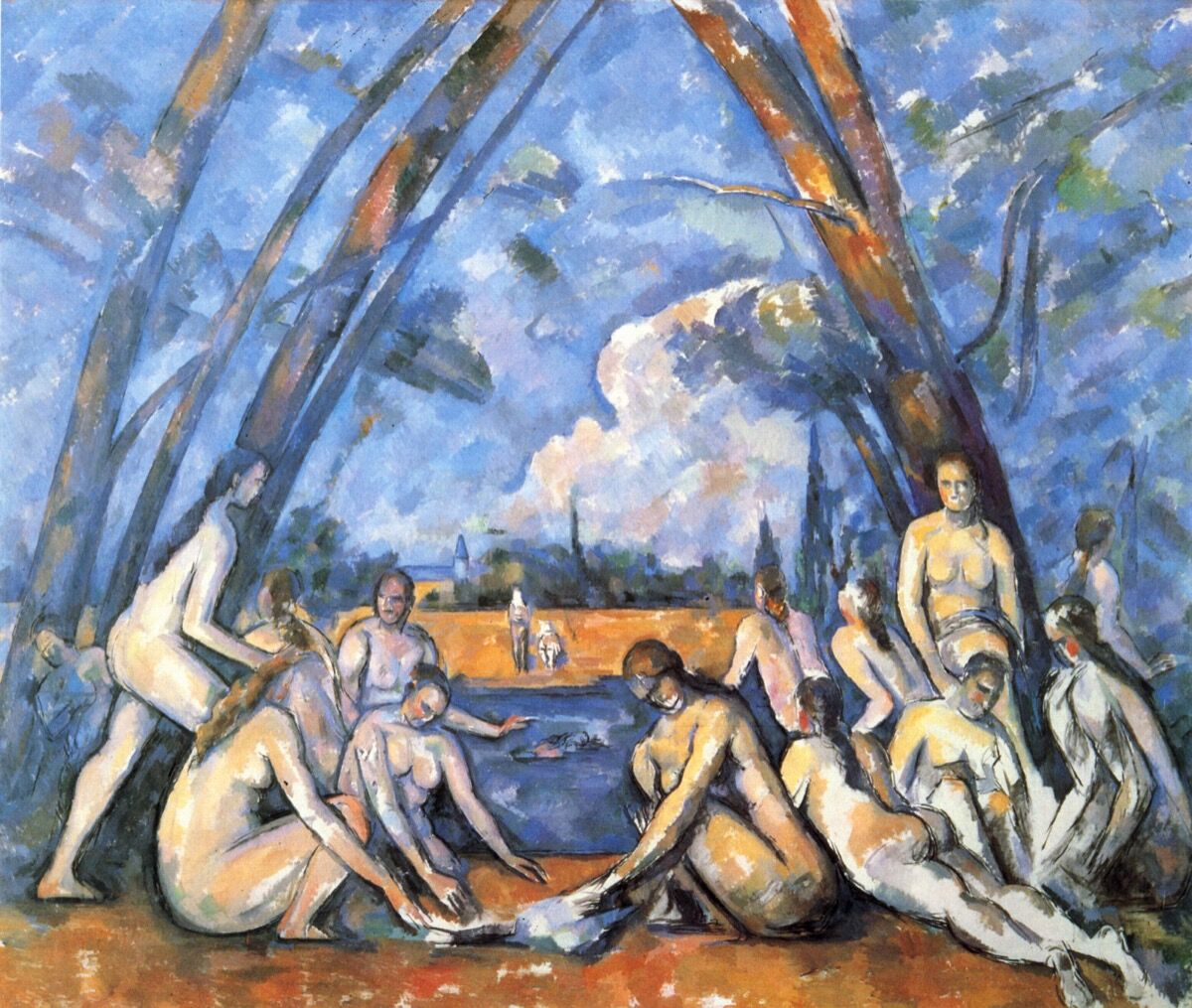
Why Art History Is Full of People Taking Baths - Artsy

Paul Cézanne, The Large Bathers, 1900–06. Courtesy of the Philadelphia Museum of Art.
Paul Cézanne
The Large Bathers, 1900–06
Courtesy of the Philadelphia Museum of Art.


Why Art History Is Full of People Taking Baths - Artsy: It’s one of the most common human activities—yet artists from the ancient Greeks to the Surrealists and beyond have been fascinated by bathing.

The figure of the bather is one of the most common visual tropes in Western art history. From ancient Athens to 1920s Paris and beyond, painters and sculptors have presented bathing in a variety of ways with myriad different aims, whether instructional, titillating, or allegorical...


Please visit my other blogs: Art Collector, Mythology, Marine Art, and The Canals of Venice

Images are copyright of their respective owners, assignees or others. Some Images may be subject to copyright

I don't own any of these images - credit is always given when due unless it is unknown to me. if I post your images without your permission, please tell me.

I do not sell art, art prints, framed posters or reproductions. Ads are shown only to compensate the hosting expenses.

If you enjoyed this post, please share with friends and family.

Thank you for visiting my blog and also for liking its posts and pages.

Emil Nolde (born Emil Hansen; 7 August 1867 – 13 April 1956) was a German-Danish painter and printmaker

Emil Nolde

Emil Nolde (born Emil Hansen; 7 August 1867 – 13 April 1956) was a German-Danish painter and printmaker. He was one of the first Expressionists, a member of Die Brücke, and was one of the first oil painting and watercolor painters of the early 20th century to explore color. He is known for his brushwork and expressive choice of colors. Golden yellows and deep reds appear frequently in his work, giving a luminous quality to otherwise somber tones. His watercolors include vivid, brooding storm-scapes and brilliant florals.


Nolde's intense preoccupation with the subject of flowers reflected his interest in the art of Vincent van Gogh. More on Emil Nolde


Please visit my other blogs: Art Collector, Mythology, Marine Art, and The Canals of Venice

Images are copyright of their respective owners, assignees or others. Some Images may be subject to copyright

I don't own any of these images - credit is always given when due unless it is unknown to me. if I post your images without your permission, please tell me.

I do not sell art, art prints, framed posters or reproductions. Ads are shown only to compensate the hosting expenses.

If you enjoyed this post, please share with friends and family.

Thank you for visiting my blog and also for liking its posts and pages.