30 Old Time Movie Posters

The 7th Voyage of Sinbad, Alexander the Great, Along Came Jones, The Ambassador's Daughter, And God Created Woman, Angel Buns, Babes in Bagdad, The Bad and the Beautiful , The Battle of Russia, Belle of the Yukon, Blonde Bait, Bright Leaf, A Breath of Scandal, Brides of Dracula, The Cat Girl, Cat on a Hot Tin Roof, The Curse of the Mummy's Tomb, Desiree, Duel at Diablo, Fast and Sexy, From the Earth to the Moon, The Fugitive, Garden of Evil, Giant, The Gift of Love, Gone with the Wind, The Joker is Wild, The Juggler

The 7th Voyage of Sinbad (Columbia, 1958). One Sheet (27" X 41"). Fantasy.
Starring Kerwin Mathews, Kathryn Grant, Richard Eyer, Torin Thatcher, Alec Mango, Danny Green, Harold Kasket, Alfred Brown, Nana DeHerrera, Nino Falanga, Luis Guedes, and Virgilio Teixeira. Directed by Nathan Juran
.

Ada May by Alfred Cheney Johnston in Lollipop (1924). Portrait Photo (11" X 14"). 
Vintage gelatin silver, double weight, glossy photo of actress/dancer/singer Ada May. 

Alexander the Great (United Artists, 1956). Three Sheet (41.5" X 78"). Drama.
Starring Richard Burton, Fredric March, Claire Bloom, Danielle Darrieux, Barry Jones, Harry Andrews, Stanley Baker, Niall MacGinnis, Peter Cushing, Michael Hordern, and Helmut Dantine. Directed by Robert Rossen.

Along Came Jones (RKO, 1945). One Sheet (27" X 41"). Western.
Starring Gary Cooper, Loretta Young, William Demarest, Dan Duryea, Frank Sully, Don Costello, Walter Sande, Russell Simpson, Arthur Loft, Willard Robertson, Ray Teal, and Lane Chandler. Directed by Stuart Heisler.

The Ambassador's Daughter (United Artists, 1956). One Sheets (2) (27" X 41"). Comedy.
Starring Olivia de Havilland, John Forsythe, Myrna Loy, Adolphe Menjou, Tommy Noonan, and Minor Watson. Directed by Norman Krasna.


And God Created Woman (Cocinor, R-1964). 
French Grande (46.5" X 62"). Foreign.
Starring Brigitte Bardot, Curt Jürgens, Jean-Louis Trintignant, Christian Marquand, Jean Tissier, Isabelle Corey, Jacqueline Ventura, Jacques Ciron, Paul Faivre, Jany Mourey, Philippe Grenier, and Jean Lefebvre. Directed by Roger Vadim. 

Angel Buns (Quality X, 1981). One Sheet (27" X 41"). Adult.
Starring Veronica Hart, Angelina Flores, Lisa Beth, Diane May, Robert Kerman, Jerry Butler, and Ron Jeremy. Directed by David Buckley. 

Babes in Bagdad (United Artists, 1952). One Sheet (27" X 41"). Comedy.
Starring Paulette Goddard, Gypsy Rose Lee, Richard Ney, John Boles, Thomas Gallagher, and Sebastian Cabot. Directed by Jeronimo Mihura and Edgar G. Ulmer. 

The Bad and the Beautiful (MGM, 1953). Australian Daybill (13.5" X 29.75"). Drama.
Starring Lana Turner, Kirk Douglas, Walter Pidgeon, Dick Powell, Barry Sullivan, Gloria Grahame, Gilbert Roland, Leo G. Carroll, Paul Stewart, Elaine Stewart, and Barbara Billingsley. Directed by Vincente Minnelli. 

The Battle of Russia (20th Century Fox, 1943). Window Card (14" X 22"). War.
Narrated by Walter Huston and Anthony Veiller. Directed by Frank Capra and Anatole Litvak. 

Belle of the Yukon (United Artists, 1944). British Quad (30" X 40"). Musical.
Starring Randolph Scott, Gypsy Rose Lee, Dinah Shore, Bob Burns, Charles Winninger, William Marshall, Guinn 'Big Boy' Williams, Robert Armstrong, Florence Bates, Victor Kilian, Wanda McKay, Edward Fielding, Jane Hale, and Eddie Acuff. Directed by William A. Seiter. 

Blonde Bait (Associated Film, 1956). One Sheet (27" X 41"). Bad Girl.
Starring Beverly Michaels, Jim Davis, Richard Travis, Joan Rice, Paul Cavanaugh, and Harry Lauter. Directed by Elmo Williams, Herbert Glazer.

Bright Leaf (Warner Brothers, 1950). Three Sheet (41.25" X 79.25"). Drama.
Starring Gary Cooper, Lauren Bacall, Patricia Neal, Jack Carson, Donald Crisp, Gladys George , Elizabeth Patterson, and Jeff Corey. Directed by Michael Curtiz.

A Breath of Scandal (Paramount, 1960). One Sheet (27" X 41"). Romance.
Starring Sophia Loren, Maurice Chevalier, John Gavin, Angela Lansbury, Isabel Jeans, and Tullio Carminati. Directed by Michael Curtiz.

Brides of Dracula (Universal International, 1960). One Sheet (27" X 41"). Horror.
Starring Peter Cushing, Freda Jackson, Martita Hunt, Yvonne Monlaur, David Peel, Mona Washbourne, Andree Melly, and Stephanie Watts. Directed by Terence Fisher. 

The Cat Girl (American International, 1957). One Sheet (27" X 41"). Horror.
Starring Barbara Shelley, Robert Ayres, Kay Callard, Paddy Webster, and Ernest Milton. Directed by Alfred Shaughnessy. 

Cat on a Hot Tin Roof (MGM, 1958). Half Sheet (22" X 28") Style B. Drama.
Starring Elizabeth Taylor, Paul Newman, Burl Ives, Jack Carson, Judith Anderson, Madeleine Sherwood, Larry Gates, and Vaughn Taylor. Directed by Richard Brooks. 

The Curse of the Mummy's Tomb (Columbia, 1964). One Sheet (27" X 41"). Horror.
Starring Terence Morgan, Ronald Howard, Fred Clark, Jeanne Roland, George Pastell, and Jack Gwillim. Directed by Michael Carreras.

Desiree (20th Century Fox, 1954). One Sheet (27" X 41"). Drama.
Starring Marlon Brando, Jean Simmons, Merle Oberon, Michael Rennie, Cameron Mitchell, Elizabeth Sellars, Charlotte Austin, Cathleen Nesbitt, Evelyn Varden, Isobel Elsom, John Hoyt, Alan Napier, and Carolyn Jones. Directed by Henry Koster. 

Duel at Diablo (United Artists, 1966). British Quad (30" X 39.75"). Western.
Starring James Garner, Sidney Poitier, Bibi Andersson, Dennis Weaver, Bill Travers, William Redfield, John Hoyt, John Crawford, Eddie Little Sky, and Richard Farnsworth. Directed by Ralph Nelson. 

Fast and Sexy (Columbia, 1960). One Sheet (27" X 41") & Photos (2) (8" X 10"). Foreign.
Starring Gina Lollobrigida, Vittorio De Sica, Dale Robertson, Amedeo Nazzari, Peppino De Filippo, Carla Macelloni, Gabriella Pallotta, Luigi De Filippo, Clelia Matania, Renzo Cesana, Terence Hill, and Augusta Ciolli. Directed by Vittorio De Sica and Carlo Lastricati.

From the Earth to the Moon (Warner Brothers, 1958). One Sheet (27" X 41"). 
Science Fiction.
Starring Joseph Cotten, George Sanders, Debra Paget, Don Dubbins, Patric Knowles, Carl Esmond, Henry Daniell, Melville Cooper, Ludwig Stossel, and Morris Ankrum. Directed by Byron Haskin. 

The Fugitive (RKO, 1947). One Sheet (27" X 41"). Drama.
Starring Henry Fonda, Dolores del Rio, Pedro Armendariz, J. Carrol Naish, Leo Carrillo, Ward Bond, Robert Armstrong, John Qualen, Fortunio Bonanova, and Chris-Pin Martin. Directed by John Ford. 

Garden of Evil (20th Century Fox, 1954). One Sheet (27.25" X 41.5"). Western.
Starring Gary Cooper, Susan Hayward, Richard Widmark, Rita Moreno, Hugh Marlowe, Cameron Mitchell, Víctor Manuel Mendoza, Fernando Wagner, and Arturo Soto Rangel. Directed by Henry Hathaway. 
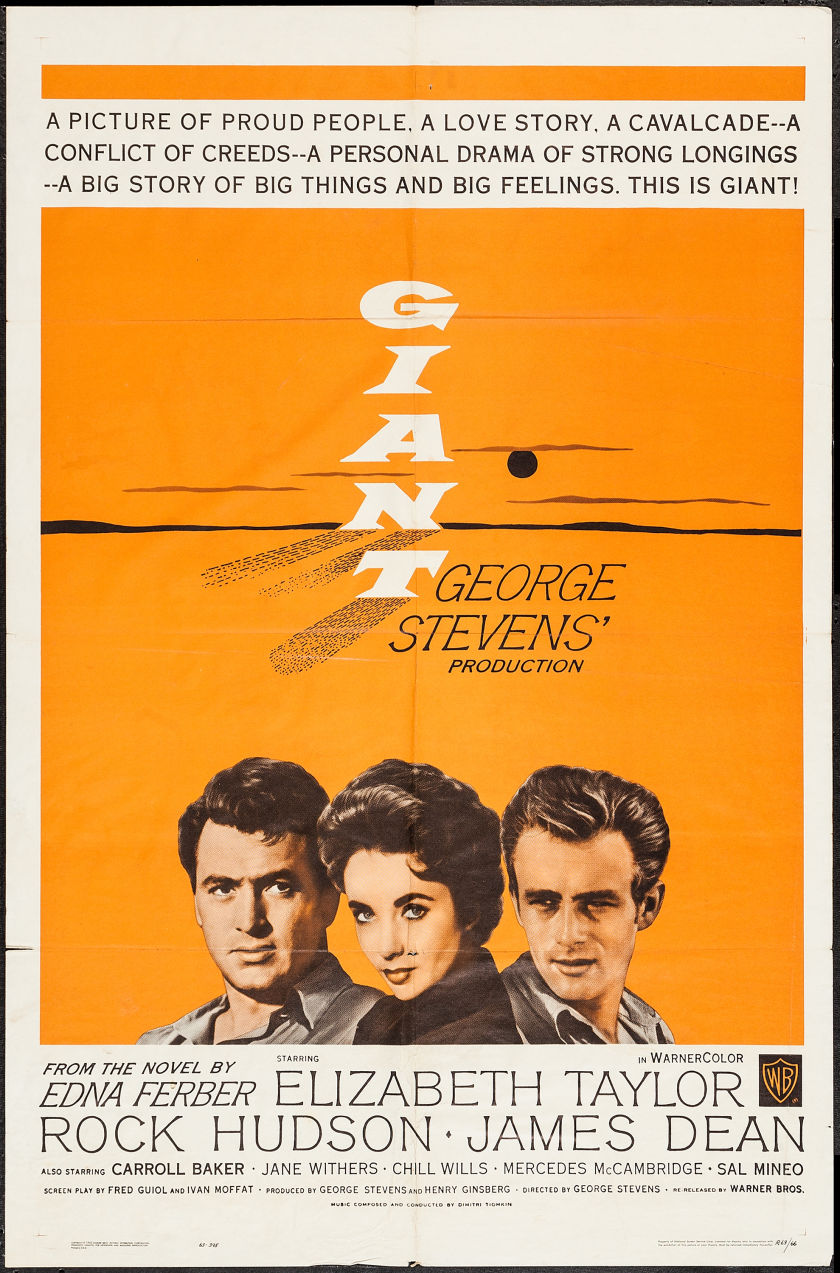
Giant (Warner Brothers, R-1963). One Sheet (27" X 41"). Drama.
Starring Elizabeth Taylor, Rock Hudson, James Dean, Mercedes McCambridge, Jane Withers, Carroll Baker, Chill Wills, Dennis Hopper, Sal Mineo, Rod Taylor, Earl Holliman, Paul Fix, and Mickey Simpson. Directed by George Stevens.


The Gift of Love (20th Century Fox, 1958). Three Sheet (41" X 81"). Drama.
Starring Lauren Bacall, Robert Stack, Evelyn Rudie, Lorne Greene, Anne Seymour, Edward Platt, and Joseph Kearns. Directed by Jean Negulesco.

Gone with the Wind (MGM, R-1967). Poster (40" X 60"). Academy Award Winners.
Starring Clark Gable, Vivien Leigh, Leslie Howard, Olivia de Havilland, Thomas Mitchell, Barbara O'Neil, Evelyn Keyes, Ann Rutherford, George Reeves, Hattie McDaniel, Butterfly McQueen, and Victor Jory. Directed by Victor Fleming. 

The Joker is Wild (Paramount, 1957). British Quad (30" X 39.75"). Drama.
Starring Frank Sinatra, Mitzi Gaynor, Jeanne Crain, Eddie Albert, Beverly Garland, Jackie Coogan, and Sophie Tucker. Directed by Charles Vidor. 

The Juggler (Columbia, 1953). One Sheet (27" X 41"). Drama.
Starring Kirk Douglas, Milly Vitale, Paul Stewart, Joey Walsh, Alf Kjellin, Beverly Washburn, Charles Lane, and John Banner. Directed by Edward Dmytryk. 

01 Sculpture, Olympian deities, Scipione Tadolini's GREEK SLAVE, with footnotes

Scipione Tadolini (1822-1892). Italian, Rome, 1860
LA SCHIAVA GRECA (THE GREEK SLAVE)
arrara marble, on a later rosso marble pedestal
marble: 166cm., 65 3/8 in., base: 52cm., 20½in.
Private collection

About the sculpture. This elegantly conceived figure of a Greek Slave is one of Scipione Tadolini's defining masterpieces. Tadolini was the eldest son and inheritor of Antonio Canova's principal studio assistant, Adamo Tadolini, and, like his father, he rapidly emerged as one of the leading sculptors in Rome during his lifetime. The superbly carved and polished surface of this serene marble stands in the celebrated tradition of idealised statuary established by Canova, the greatest Italian sculptor of the 18th and 19th centuries and the father of neoclassicism. However, the touching portrayal of a beautiful young girl enslaved, together with her orientalist guise, looks forward to the Romantic movement in 19th-century sculpture.

An idealised female youth stands in contrapposto, her right arm raised as she contemplates her bracelet. Tadolini's magisterial composition is a response to one of the most famous sculptures of the age, Hiram Powers' Greek Slave, which was exhibited for the first time at the Great Exhibition in London in 1851, where it caused a sensation, both for its beauty and for its scandalous nudity (the marble is currently in the collection of Lord Barnard at Raby Castle, Durham). Like Powers' model, the theme of Tadolini's sculpture is taken from the Greek War of Independence of the 1820's. The young woman has been abducted by the Turks and is about to be sold in a slave market. Tadolini's Greek Slave is consequently a highly emotive and politically charged image, designed to appeal to a Western audience through portraying a Christian innocent enslaved within a Muslim culture. The Turkish context within which the Greek Slave finds herself is emphasised by Tadolini in the beautifully carved headress, which falls about her shoulders, and recalls Ingres' La Grande Odalisque (1814; musée du Louvre, Paris. More About the sculpture

Scipione Tadolini (1822–1893) was an Italian sculptor operating in the second half of the 19th century.

Tadolini was trained in his father's studio. His first major work was Ninfa Pescatrice (Nymph Fishing) in 1846. During his career, he created a statue of Santa Lucia for the Santa Lucia del Gonfalone Church in Rome, a bust of Victor Emmanuel II of Italy, an equestrian portrait of Simon Bolivar for Lima, Peru, and St Michael Overcoming Satan, commissioned by merchant Gardner Brewer and now in Boston College. His family's studio, at 150a-b Via del Babuino, Rome, has now been restored as the Museo Atelier Canova Tadolini, which preserves the works of Canova and the Tadolini family. More on Scipione Tadolini


Please visit my other blogs: Art Collector, Mythology, Marine Art, Portrait of a Lady, The Orientalist, Art of the Nude and The Canals of Venice, Middle East Artists, 365 Saints and 365 Days, also visit my Boards on Pinterest

Images are copyright of their respective owners, assignees or others. Some Images may be subject to copyright

I don't own any of these images - credit is always given when due unless it is unknown to me. if I post your images without your permission, please tell me.

I do not sell art, art prints, framed posters or reproductions. Ads are shown only to compensate the hosting expenses.

If you enjoyed this post, please share with friends and family.

Thank you for visiting my blog and also for liking its posts and pages.

Please note that the content of this post primarily consists of articles available from Wikipedia or other free sources online.


01 Work, Streets of Paris, Camille Pissarro's Rue Saint-Honoré in the Afternoon, with footnotes, #11

Camille Pissarro
Rue Saint-Honoré in the Afternoon. Effect of Rain, 1897
Oil on canvas. 81 x 65 cm

Rue Saint-Honoré in the Afternoon. Effect of Rain belongs to a series of fifteen works that Camille Pissarro painted in Paris from the window of his hotel in the place du Théâtre Français during the winter of 1897 and 1898. Pissarro, who had spent practically all of his life in the country and was basically a landscape painter — and one of the first convincing practitioners of plein air painting — was forced to move to the city for health reasons towards the end of his life. It was then that he began to paint urban scenes viewed from windows, capturing the bustle of the streets of cities like Rouen and Paris. Stylistically, this last decade of his life coincides with his return to an Impressionist technique after experimenting with the influence of Seurat for a short period. Pointillisme , which he abandoned owing to its excessive rigidity, helped him lighten his palette and compose his last paintings in a less rigorous manner. More on this painting

Camille Pissarro (10 July 1830 – 13 November 1903) was a Danish-French Impressionist and Neo-Impressionist painter born on the island of St Thomas (now in the US Virgin Islands, but then in the Danish West Indies). His importance resides in his contributions to both Impressionism and Post-Impressionism. Pissarro studied from great forerunners, including Gustave Courbet and Jean-Baptiste-Camille Corot. He later studied and worked alongside Georges Seurat and Paul Signac when he took on the Neo-Impressionist style at the age of 54.

In 1873 he helped establish a collective society of fifteen aspiring artists, becoming the "pivotal" figure in holding the group together and encouraging the other members. Art historian John Rewald called Pissarro the "dean of the Impressionist painters", not only because he was the oldest of the group, but also "by virtue of his wisdom and his balanced, kind, and warmhearted personality".  More on Camille Pissarro


Please visit my other blogs: Art Collector, Mythology, Marine Art, Portrait of a Lady, The Orientalist, Art of the Nude and The Canals of Venice, Middle East Artists, 365 Saints and 365 Days, also visit my Boards on Pinterest

Images are copyright of their respective owners, assignees or others. Some Images may be subject to copyright

I don't own any of these images - credit is always given when due unless it is unknown to me. if I post your images without your permission, please tell me.

I do not sell art, art prints, framed posters or reproductions. Ads are shown only to compensate the hosting expenses.

If you enjoyed this post, please share with friends and family.

Thank you for visiting my blog and also for liking its posts and pages.

Please note that the content of this post primarily consists of articles available from Wikipedia or other free sources online.

14 Works, Art For Today June 20, 2015; George Elbert Burr, Henri Matisse, Louis Icart, Luigi Lucioni, Lyonel Feininger, Marc Chagall,

Marc Chagall
LES AMOUREUX DE VENCE
Dimensions:  28.54 X 39.17 in (72.5 X 99.5 cm)
Medium:  oil on canvas
Creation Date:  1957
Signed

Marc Chagall
Femme de Potiphar
Dimensions:  21.06 X 15.35 in (53.5 X 39 cm)
Medium:  Etching
Creation Date:  1958
Edition Number:  80/100

Marc Chagall
Moses Striking the Rock
Dimensions:  17.52 X 13.58 in (44.5 X 34.5 cm)
Medium:  Color lithograph
Creation Date:  1966
Edition Number:  from an edition of 250 copies on ARCHES wove paper

ANGEL OF PARADISE
By Marc Chagall
Dimensions: 13.98 X 10.24 in (35.5 X 26 cm)
Medium: Lithograph printed in colours
Creation Date: 1956
Signed
Edition Number: edition of 6500

DAVID AND BATHSHEBA, FROM THE BIBLE
By Marc Chagall
Dimensions: 13.98 X 10.24 in (35.5 X 26 cm)
Medium: Lithograph printed in colours
Creation Date: 1956
Signed

George Elbert Burr
Oaks in Winter #2
Dimensions:  9 X 6.75 in (22.86 X 17.14 cm)
Medium:  drypoint
Creation Date:  1930
Signed

George Elbert Burr
Winter #2
Dimensions:  6.88 X 9.88 in (17.48 X 25.1 cm)
Medium:  drypoint
Signed

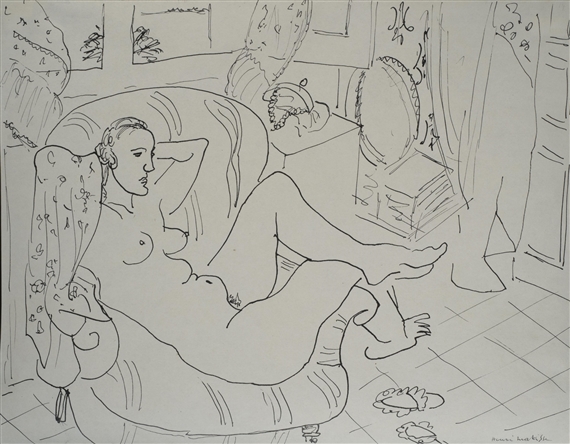
Henri Matisse
Femme nue dans un intérieur
Dimensions:  9.06 X 11.61 in (23 X 29.5 cm)
Medium:  Pen and India ink on paper
Creation Date:  1925
Signed

Henri Matisse
A Maison de la Pensee Francaise
Dimensions:  31 X 22.5 in (78.74 X 57.15 cm)
Medium:  Vintage lithograph
Signed

Louis Icart
Loves Awakening
Dimensions:  8.56 X 11.25 in (21.74 X 28.58 cm)
Medium:  etching in colors
Creation Date:  1933
Signed

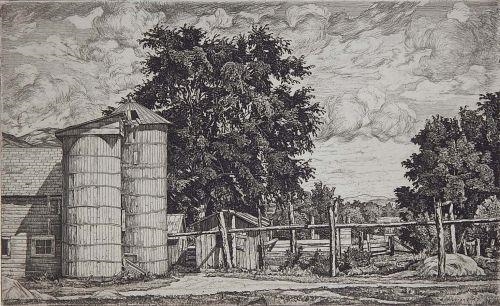
Luigi Lucioni
Two Silos
Dimensions:  7.25 X 11.88 in (18.42 X 30.18 cm)
Medium:  etching
Creation Date:  1942
Edition Number:  edition of 250
Signed

Luigi Lucioni
The Mill
Dimensions:  6.63 X 9 in (16.84 X 22.86 cm)
Medium:  etching
Creation Date:  1932
Signed

ARCHITECTURE WITH STARS II
By Lyonel Feininger
Dimensions: 16.25 X 28.25 in (41.28 X 71.76 cm)
Medium: oil on canvas
Creation Date: 1945
Signed

Marc Chagall
Bouquet près de la fenêtre
Dimensions:  47.25 X 59 in (120.02 X 149.86 cm)
Medium:  oil on canvas
Creation Date:  1959 - 1960
Signed


Please visit my other blogs: Art Collector, Mythology, Marine Art, Portrait of a Lady, The Orientalist, Art of the Nude and The Canals of Venice, Middle East Artists, 365 Saints and 365 Days, also visit my Boards on Pinterest

Images are copyright of their respective owners, assignees or others. Some Images may be subject to copyright

I don't own any of these images - credit is always given when due unless it is unknown to me. if I post your images without your permission, please tell me.

I do not sell art, art prints, framed posters or reproductions. Ads are shown only to compensate the hosting expenses.

If you enjoyed this post, please share with friends and family.

Thank you for visiting my blog and also for liking its posts and pages.

Please note that the content of this post primarily consists of articles available from Wikipedia or other free sources online.

Montague Dawson; TIMARU, A NEW ZEALAND CLIPPER

Montague Dawson R.S.M.A., F.R.S.A. - 1890-1973
TIMARU, A NEW ZEALAND CLIPPER
signed l.l.: MONTAGUE DAWSON; titled and inscribed on stretcher: TIMARU A NEW ZEALAND CLIPPER 1036 TONS BUILT IN 1874
oil on canvas
61 by 91.5cm., 24 by 36in.

Timaru was an iron full-rigged skysail yarder, built by Scott of Greenock on the River Clyde and launched in December during the harsh winter of 1874. It was commissioned by Patrick Henderson & Co of the Albion Line along with her sister-ships Oamaru; Dunedin; Auckland. At this time full-rigged sailing ships were still being built in Scotland but steam-ships were beginning to replace them. The ship was initially named the Scotia but was later re-named Timaru in honour of the port in New Zealand, whose Rowing Club was founded in the same year as the ship’s launch. Measuring 239 feet in length it had a capacity to hold five-hundred passengers on the emigration route to the New World. It was later converted with a refrigeration system so that it could be used to transport frozen meat - particularly lamb - from New Zealand. More

Montague Dawson RMSA, FRSA (1890–1973) was a British painter who was renowned as a maritime artist. His most famous paintings depict sailing ships, usually clippers or warships of the 18th and 19th centuries. He was the son of a keen yachtsman and the grandson of the marine painter, born in Chiswick, London. Much of his childhood was spent on Southampton Water where he was able to indulge his interest in the study of ships.In 1924 Dawson was the official artist for an Expedition to the South Seas by the steam yacht St.George. During the expedition he provided illustrated reports to the Graphic magazine.

After the War, Dawson established himself as a professional marine artist, concentrating on historical subjects and portraits of deep-water sailing ships often in stiff breeze or on high seas. During the Second World War, he was employed as a war. Dawson exhibited regularly at the Royal Society of Marine Artists, of which he became a member, from 1946 to 1964, and occasionally at the Royal Academy between 1917 and 1936. By the 1930s he was considered one of the greatest living marine artists. Dawson is noted for the strict accuracy in the nautical detail of his paintings.

The work of Montague Dawson is represented in the National Maritime Museum, Greenwich and the Royal Naval Museum, Portsmouth.

01 Painting - Marine Art, Sir Frank Brangwyn's THE LAST FIGHT OF THE REVENGE, with Footnotes

Sir Frank Brangwyn, R.A., R.W.S. - 1867-1956
THE LAST FIGHT OF THE REVENGE
Oil on canvas
122 by 157.5cm., 48 by 62in
Private collection

The Battle of Flores was a naval engagement of the Anglo-Spanish War of 1585 fought off the Island of Flores between an English fleet of 22 ships under Lord Thomas Howard and a Spanish fleet of 53 ships under Alonso de Bazán. Sent to the Azores to capture the annual Spanish treasure convoy, when a stronger Spanish fleet appeared off Flores, Howard ordered his ships to flee to the north, saving all of them except the galleon Revenge commanded by Admiral Sir Richard Grenville. After transferring his ill crew men onshore back to his ship, he led the Revenge in a rear guard action against 53 Spanish ships. Allowing the British fleet to retire to safety. The crew of the Revenge sank and damaged several Spanish ships during a day and night running battle. The Revenge was boarded many times by different Spanish ships and repelled each attack successfully. When Admiral Sir Richard Grenville was badly wounded, his surviving crew surrendered? More on The Battle of Flores 

Sir Frank William Brangwyn RA RWS RBA (12 May 1867 – 11 June 1956), though born in Bruges, Belgium, was an Anglo-Welsh artist, painter, water colourist, virtuoso engraver and illustrator, and progressive designer.

In 1936 Brangwyn presented Bruges with over 400 works, now in the Arents House Museum. In return the King of Belgium made Brangwyn Grand Officer of the Order of Leopold II, and Bruges made him Citoyen d'Honneur de Bruges (only the third time the award had been given). He was knighted in 1941.

In 1896, he married Lucy Ray, who died in 1924. They had no children. He had an affair with Ellen Kate Chesterfield, which produced a son, James Barron Chesterfield-Brangwyn, born 1885 in Mevagissey, Cornwall. James later emigrated to Australia in 1909, initially working on a farm in Townsville, Queensland and later moving to Brisbane.

Brangwyn died on 11 June 1956 at his home in Sussex. More on 
Sir Frank William Brangwyn RA RWS RBA


Please visit my other blogs: Art Collector, Mythology, Marine Art, Portrait of a Lady, The Orientalist, Art of the Nude and The Canals of Venice, Middle East Artists, 365 Saints and 365 Days, also visit my Boards on Pinterest

Images are copyright of their respective owners, assignees or others. Some Images may be subject to copyright

I don't own any of these images - credit is always given when due unless it is unknown to me. if I post your images without your permission, please tell me.

I do not sell art, art prints, framed posters or reproductions. Ads are shown only to compensate the hosting expenses.

If you enjoyed this post, please share with friends and family.

Thank you for visiting my blog and also for liking its posts and pages.

Please note that the content of this post primarily consists of articles available from Wikipedia or other free sources online.


Richard Ansdell, R.A. - 1815-1885; THE DEATH OF SIR WILLIAM LAMBTON

Richard Ansdell, R.A. - 1815-1885
THE DEATH OF SIR WILLIAM LAMBTON 
signed and indistinctly dated l.r.: Richd. Ansdell/ 1847
oil on canvas
117 by 269cm., 46 by 106in.

About this painting: This dramatic historical scene depicts the aftermath of the defeat of the prominent Royalist in the English Civil War Sir William Lambton (1599-1644) at Long Marston, west of York, on 2 July 1644, a Parliamentary victory that led to the overall control of Northern England by the Parliamentary forces. Lambton's body is carried by his loyal soldiers, overseen by Thomas Fairfax, parliamentary Commander-in-Chief and the Roundhead army moves in procession with their captives and a herd of seized sheep and cattle. Lambton's dejected page leads the knight's white pony laden with his fine clothes and his loyal deer-hound pathetically licks his master's hand as he passes by.

In 1842 Ansdell had painted an earlier scene from the story of William Lambton, depicting the moment of his death (Harris Museum and Art Gallery, Preston) which had been very popular with the critics and public when it was exhibited at the Royal Academy. More

Richard Ansdell RA (11 May 1815 – 20 April 1885) was an English oil painter of animals and genre scenes. He was also an engraver. He was born in Liverpool, Lancashire, where he was educated at The Liverpool Blue Coat school for orphans. He had a natural talent for art from an early age, and after leaving school worked for a portrait painter in Chatham in Kent, and also spent time as a sign painter in the Netherlands.

He first exhibited at the Liverpool Academy in 1835, becoming a student there the following year. His animal and rural subjects proved to be popular and he soon attracted wealthy patrons. His first exhibition at the Royal Academy, London, was in 1840, with two paintings. This was followed, in 1841 by "The Earl of Sefton and party returning from hunting", in 1842 "The death of Sir William Lambton at the Battle of Marston Moor", in 1843 "The Death" and in 1844 "Mary Queen of Scots returning from the chase to Stirling Castle". He went on to exhibit pictures every year at the Academy until 1885 (149 canvases in all). In 1846 he exhibited his first picture, "A Drover's Halt" at the British Institution, London, and went on to show 30 canvases there.

In 1850, Ansdell started collaborating on pictures with Thomas Creswick, who specialised in landscapes. He also worked with William Powell Frith and John Phillip, with whom he travelled to Spain in 1856 and painted a series of Spanish subjects. He returned to Spain alone the following year to paint more pictures there.

In 1855, Andsell was awarded a gold medal at the Paris Exhibition for his works, "The Wolf Slyer" and "Taming the Drove". He also won the "Heywood medal" three times for his work at the Manchester Royal Institution. He was elected an Associate of the Royal Academy (ARA) in 1861 and a Royal Academician (RA) in 1870.

During part of his career he kept a "summer house" at Lytham St Annes, in the borough of Fylde, where a district, Ansdell, is named after him. He is the only English artist to have been honoured in this way.

Ansdell died at "Collingwood Tower" near Frimley, Surrey in April 1885. He was buried at Brookwood Cemetery.

Archaeologists Unearth 2,000-Year-Old Treasures in Grave of Ethiopian Sleeping Beauty

Edward Burne-Jones, The Rose Bower from the "Legend of Briar Rose."
Photo via: Wikiamedia Commons

A 2,000-year-old grave of a woman filled with treasures from the Roman Empire has been found in Northern Ethiopia. The British archaeologists who found the grave, have nicknamed the woman "sleeping beauty" because of the way her body had been positioned.

"She was curled up on her side, with her chin resting on her hand, wearing a beautiful bronze ring," Louise Schofield, a former British Museum curator who oversaw the dig, told the Guardian, which reported the story. "She was buried gazing into an extraordinary Roman bronze mirror. She had next to her a beautiful and incredibly ornate bronze cosmetics spoon with a lump of kohl eyeliner." More

Art Collector: Disputed Painting Is Declared an Authentic Rembran...


Art Collector: Disputed Painting Is Declared an Authentic Rembran...: THE HAGUE — The painting was sliced down the middle and straight through its center in the 19th century, probably to be sold as two Rembr...

Disputed Painting Is Declared an Authentic Rembrandt

THE HAGUE — The painting was sliced down the middle and straight through its center in the 19th century, probably to be sold as two Rembrandt portraits. At some point in the next 40 years, it was sutured back together with pieces of an entirely different canvas, and layered with paint to cover up its scars.

In 1898, the director of the Mauritshuis Royal Picture Gallery here proudly displayed it in the museum as “Saul and David,” one of Rembrandt’s most important biblical works. Then in 1969, a top Rembrandt authority discredited the painting, and for years it hung next to a label that read, “Rembrandt and/or Studio,” a serious demotion.